Village shape
Lower & upper village
The plaza below, the old lanes with their stairs above.
Frigiliana · FAQ
How to get here, where the car goes, how steep the lanes are and what a Thursday in the village brings: the questions guests ask us most often before their trip.
Whatever is missing here, we are happy to answer on WhatsApp.
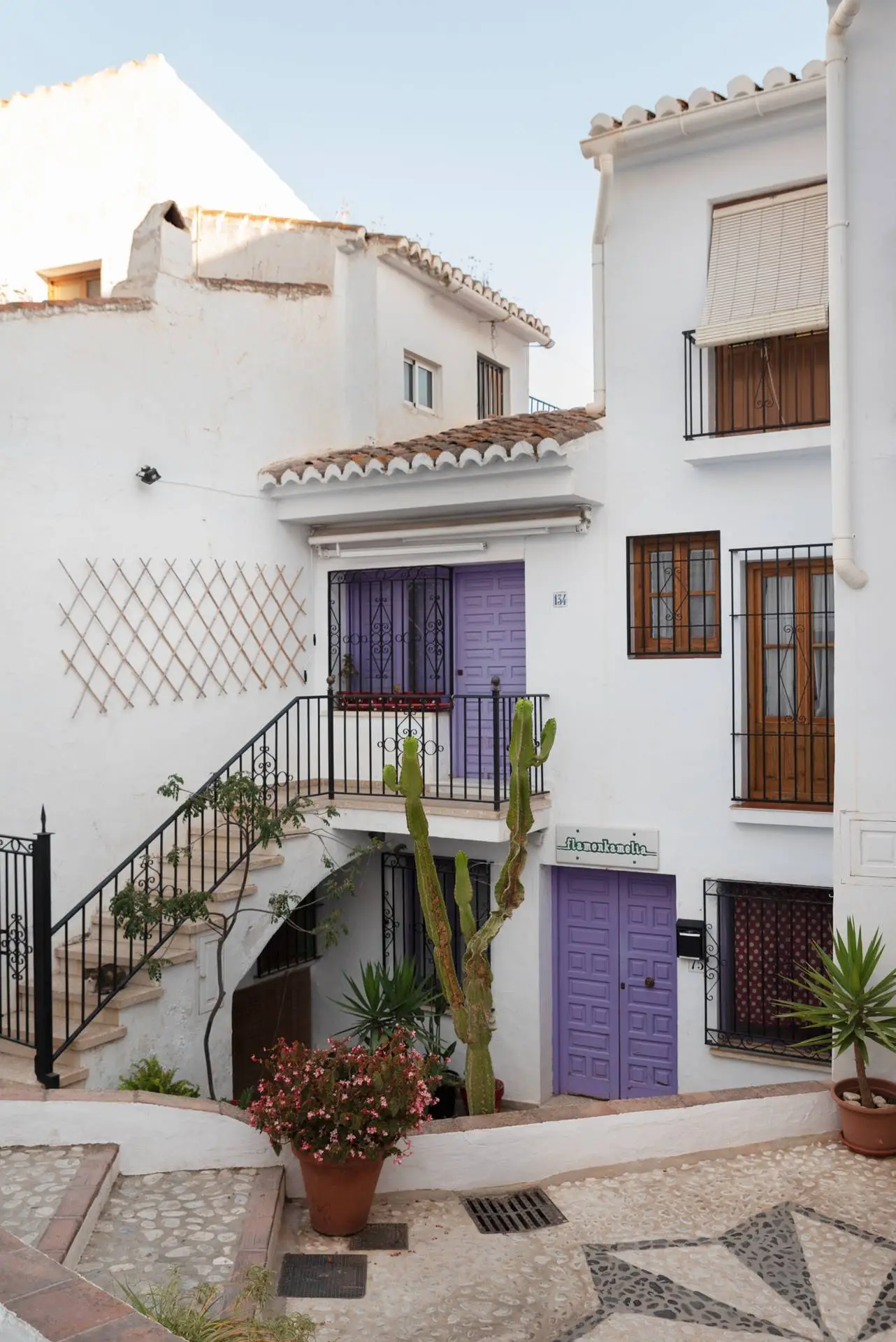
The plaza below, the old lanes with their stairs above.
Bus and taxi to Nerja, a good quarter of an hour.
On Sundays and in the evening the bus runs less often; then the taxi helps.
The village is built for slow days: park, walk up, arrive.
From Málaga airport it is a good hour. Whether you need a car depends on how often you want to leave the village.
By car along the A-7 east and from Nerja the few kilometres up into the village, a good hour in normal traffic. Without a car you take the bus to Nerja and continue from there by local bus or taxi.
Yes. In the village you are on foot; bus and taxi run to Nerja. A car is worth it for beach days, hikes further out and late arrivals.
In the underground car park at Plaza de las Tres Culturas, down in the village. From there you walk up; no car fits into the lanes of the old town.
Ride-hailing apps barely work here. Taxis from Nerja and Frigiliana run on the meter; for the airport it is best to book a fixed-price transfer.
Frigiliana clings to the hillside. Exactly where your accommodation lies decides stairs, view and quiet.
The lower village is level; the old town above it is stairs and narrow lanes. To Casa AMARA it is a few minutes on foot from the car park, with steps; if unsure, ask us for the exact route beforehand.
Day visitors arrive around eleven and leave before dinner. After that the lanes belong to those who sleep here: the evening on the terrace, the morning before the first buses.
Frigiliana for the lanes, the view and the still evenings. Nerja if you want the sea every day and need flat walks. A quarter of an hour lies between them, and we have houses in both places.
Frigiliana or Nerja comparedA village of around three thousand inhabitants, a weekly market and a festival for which the lanes turn colourful for four days at the end of August.
The restaurants and the shops on the main lane, yes. Supermarkets and the pharmacy have short opening hours on Sundays.
Thursday morning, down at Plaza de las Tres Culturas. In holiday weeks the date can shift.
Miel de caña, the dark sugar-cane syrup from the factory down in the village, over fried aubergine. Traditional menus also have migas and goat dishes.
End of August, four days long. In 2026 from 27 to 30 August: music in the lanes, stalls, the whole village on its feet.
Behind the village begins the natural park of the Sierras de Tejeda, Almijara y Alhama. The trails start at the last row of houses.
Summer is hot and dry; the village then lives early in the morning and after six. Winter is mild in the sun, cool in the shade of the lanes. Spring and autumn are hiking time.
The path up El Fuerte above the village and the trail to the rebuilt village of El Acebuchal are the best known. Both are mountain trails with elevation: sturdy shoes, water, an early start.
Yes, a village where the neighbours sit outside their doors in the evening. What needs attention are the slippery steps after rain and the midday sun.
Timetables, festival dates and hiking trails at the source.
As of July 2026
The next pages for your stay in the village.
From Málaga airport to the village, by car, transfer or bus.
Parking guideWhere the car goes and how it continues from there.
Where to stay in FrigilianaOld town, newer village or campo: what lies where.
Weekly marketThursday morning at Plaza de las Tres Culturas.
Weather guideSun, wind and rain through the year.
AMARA stay FAQBooking, arrival and your stay with AMARA.
Casa AMARA stands in the middle of the old town, with a terrace above the rooftops. We describe the way from the car park to the front door before you arrive.