Old town · El Ingenio
El Ingenio
The count’s palace that became a sugar factory
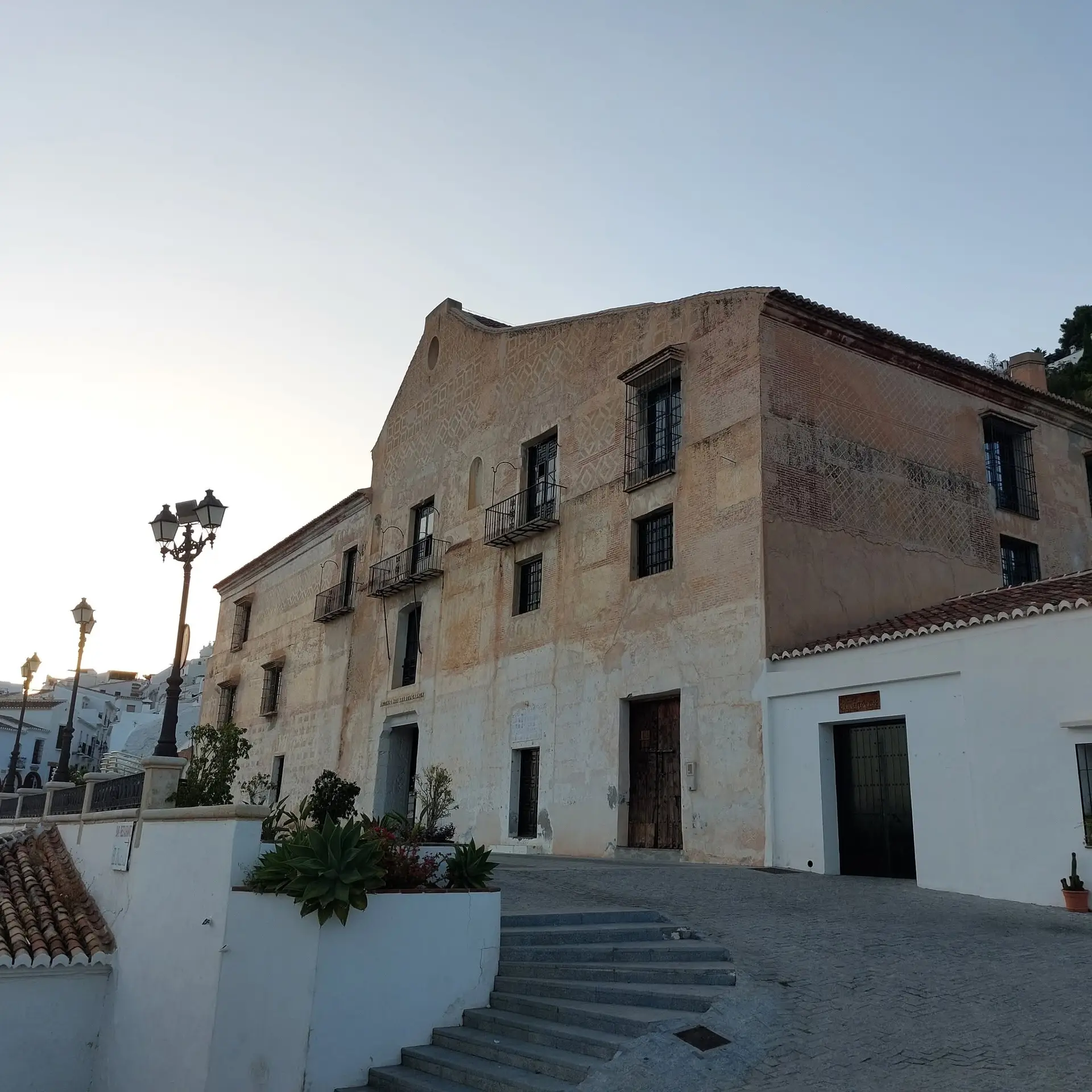
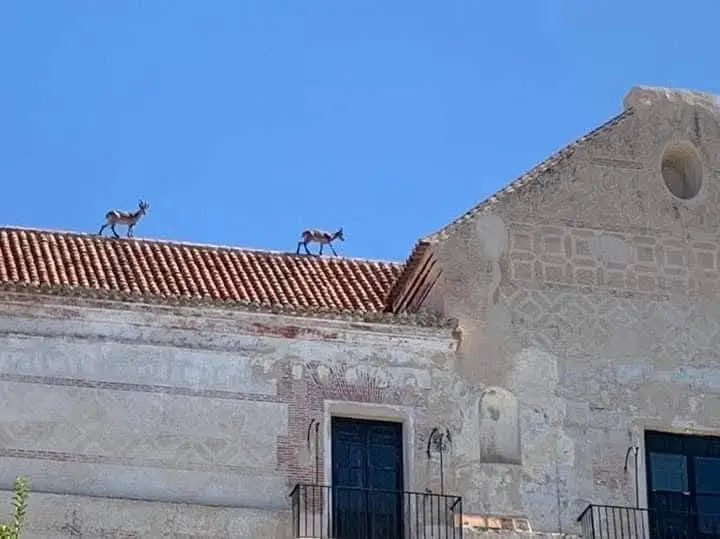
At the lower edge of the old town stands Frigiliana’s largest building: El Ingenio. It looks like a palace — and it was one, the seat of the Manrique de Lara counts in the sixteenth century. It is also a working factory: since 1725 miel de caña, a concentrated cane syrup, has been boiled here. You can read the sgraffito facade from the lane, but do not count on going in — production still happens inside. And with a little luck, a wild ibex from the sierra will be standing on the roof.
- 1508
- Lordship of the Manrique de Lara counts
- 1725
- Expanded into the sugar ingenio
- 2.000 m²
- Renaissance palace, partly from castle stone
- ~1.500
- Iberian ibex on the Málaga side of the park
Dates and floor area from heritage and noble-archive sources; the ibex figure is a park population estimate for the Málaga side, not a count at the building.
Two layers
Palace or factory?
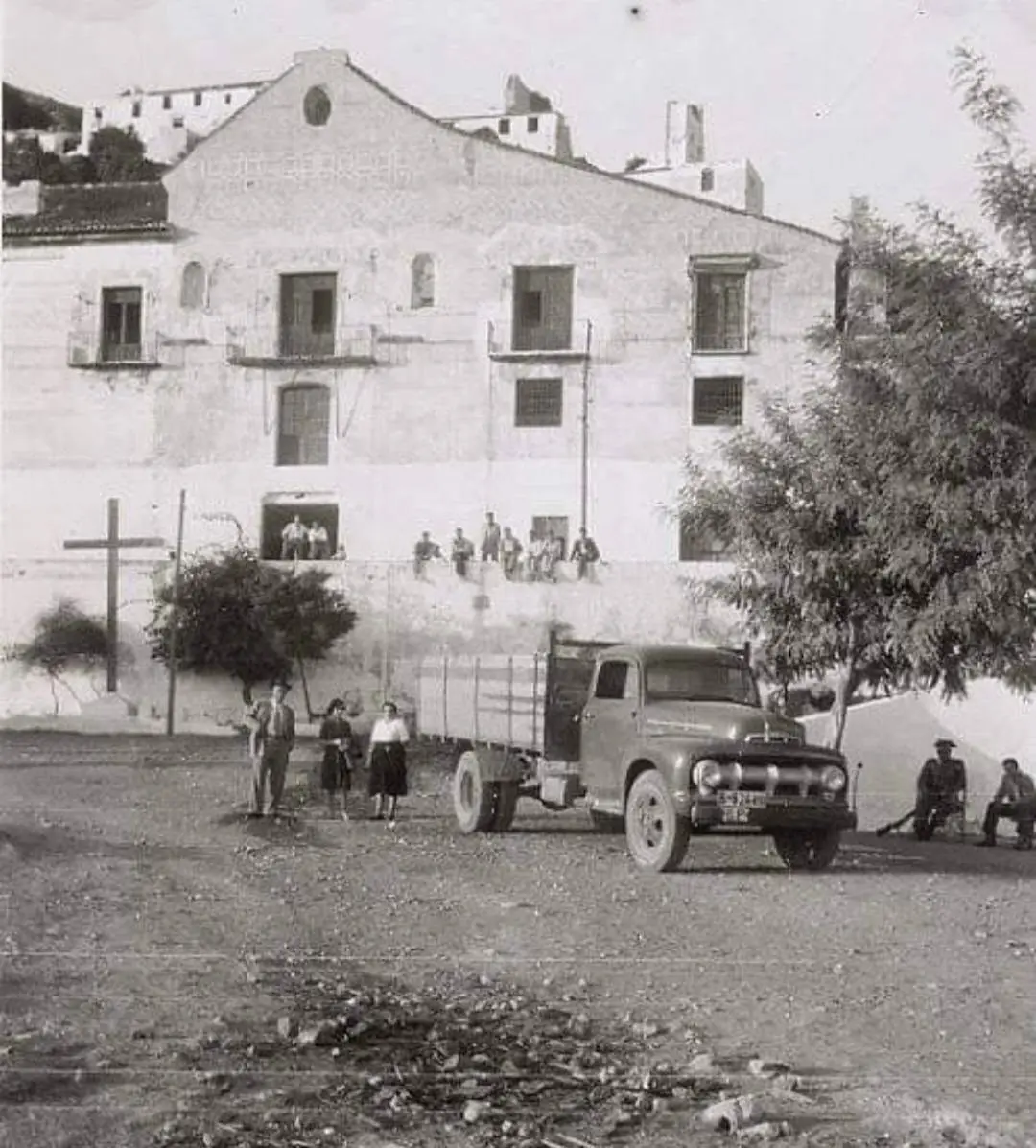
Both. The building holds two layers that are often confused — and once you separate them, the apparent contradiction disappears.
The count’s palace (16th century)
The Manrique de Lara family held the lordship of Frigiliana from 1508 and completed their Renaissance residence here in the sixteenth century — more than 2,000 square metres, built in part with stone from the old Arab castle.
The sugar works (from 1725)
A small trapiche founded by the first count grew into today’s industrial ingenio: in 1725 the count sought permission to fell timber for the works, and by 1728/29 it was fully running. That 1725 date belongs to the factory, not to the building.
Why both are known
The palace stayed in noble hands for roughly two centuries, so a great deal survives in the Noble Archive in Toledo — inventories and rents from 1672 to 1729, and a 1730 consultation on “the construction of the sugar ingenio” of Count Íñigo Manrique de Lara.
A palace on the outside, a sugar kitchen within.
From the lane
Reading the facade
From the lane the front tells you more than you would expect — this is the part of El Ingenio anyone can enjoy.
Esgrafiado
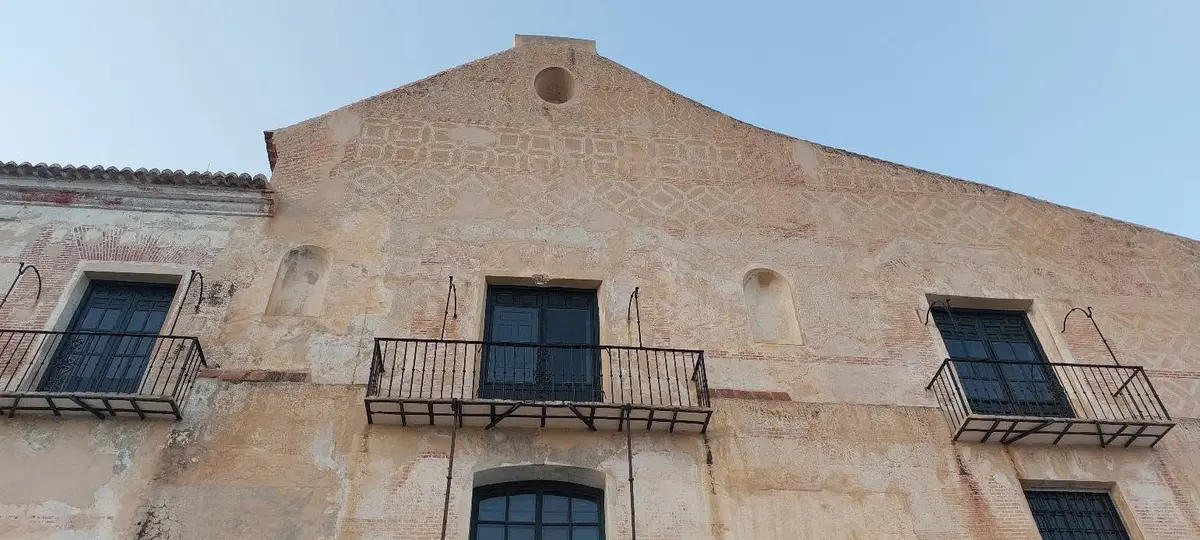
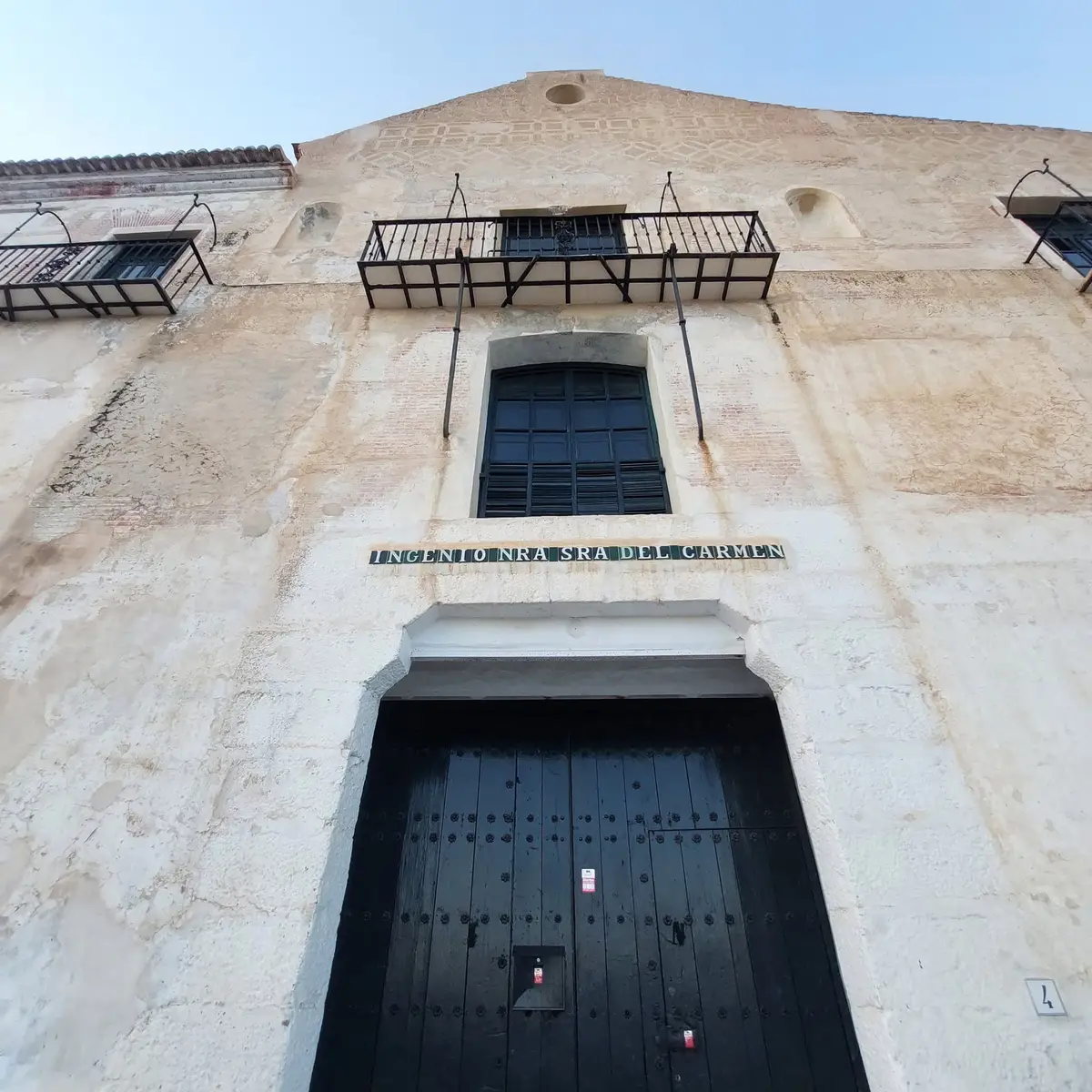
The wall carries painted and sgraffito decoration in geometric bands — diamonds and rectangles in earth tones and blue — on a rectangular body with a gabled roof that echoes the nearby church of San Antonio.
Two niches and a sundial
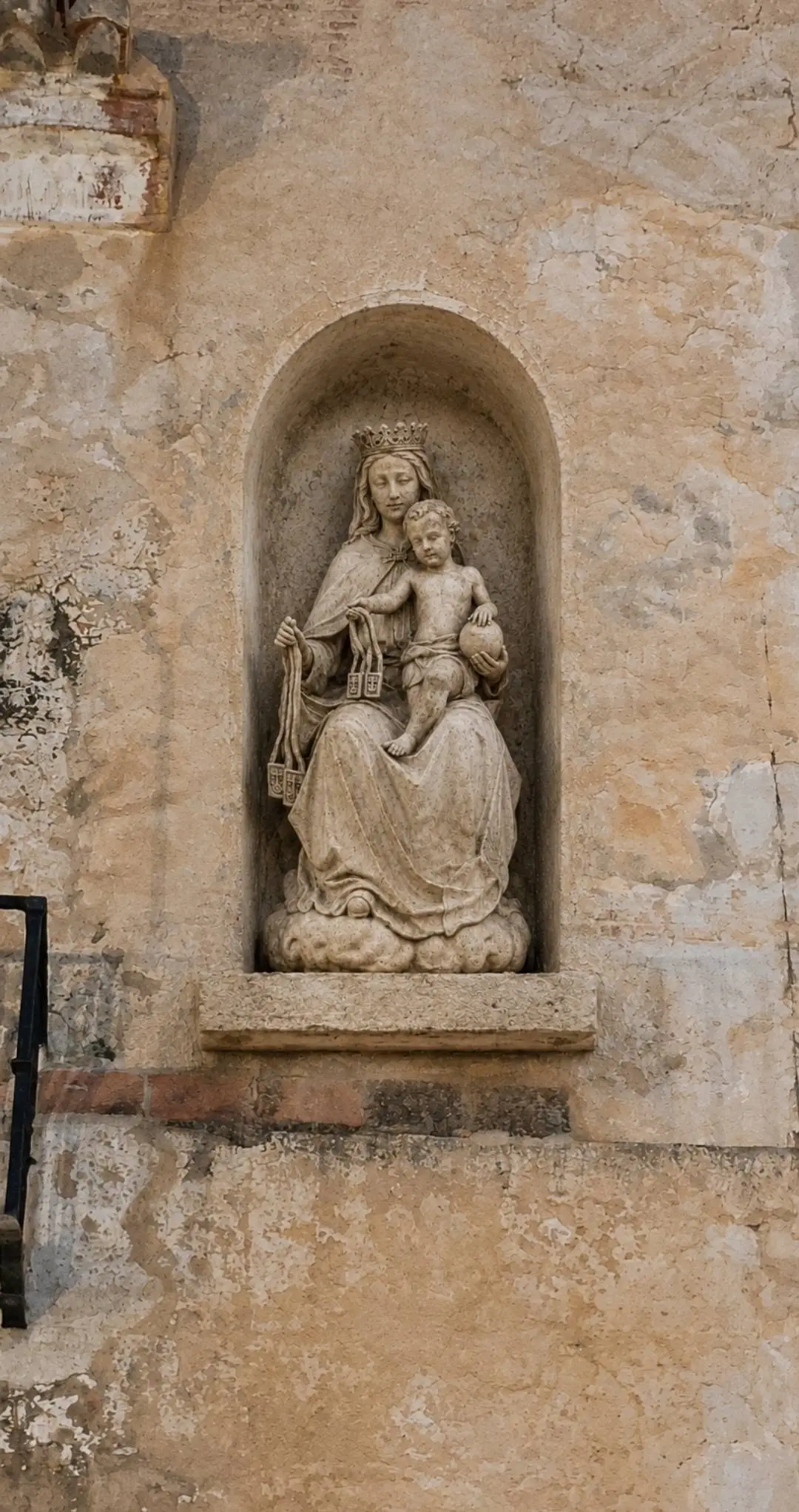
Two niches once held sculptures of the Virgen del Carmen and San Raimundo, and the front carried at least two sundials. Some niches stand empty today, so read them as the building’s memory rather than a guarantee of what you will see.
Coat of arms and chapel
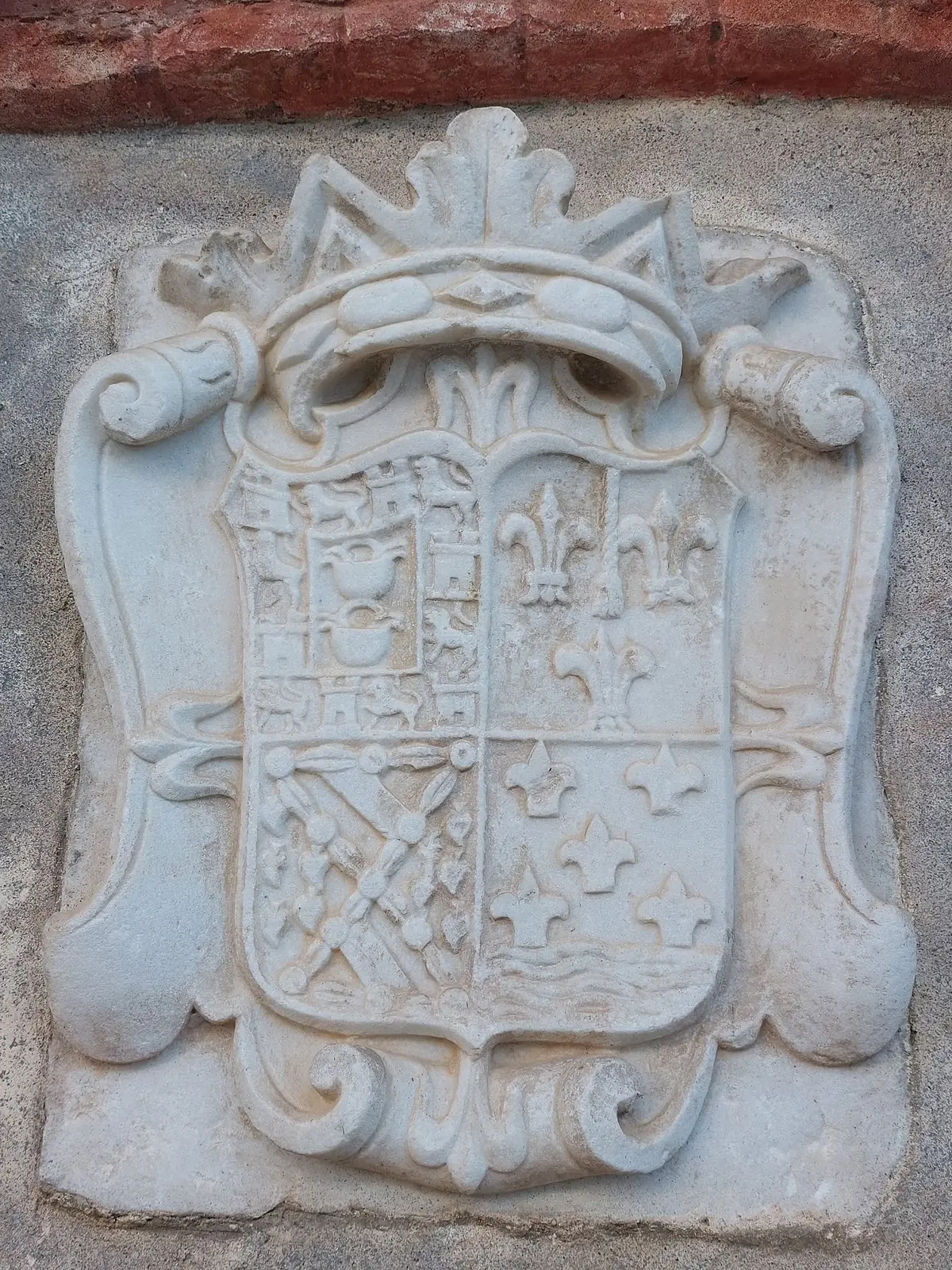
The counts left their stone coat of arms on the front, and in 1662 Pope Clement X allowed mass to be said in the building’s own chapel — a reminder that this was a lordly household, not only a workshop.
Still in operation
Miel de caña
The dark syrup that Frigiliana is known for is still made inside El Ingenio, in the Nuestra Señora del Carmen factory.
Not molasses
Miel de caña is concentrated cane juice — the whole unrefined juice, boiled down. Molasses is only what is left after sugar has crystallised out; this keeps everything. Try it on toast or fresh cheese, or over the classic fried aubergines.
The mill still turns
The mill train, built and installed by the Díaz workshops of Vélez-Málaga in the 1950s, still works — now driven by electricity — and grinds cane on a few days each year. That is why the building is a production site, not a museum with fixed opening hours.
A last of its kind
The provincial council of Málaga calls the Frigiliana ingenio the last cane-sugar works of its kind still standing on the Iberian peninsula. Take that as the attributed distinction it is, and taste the result: at the Cruces de Mayo, neighbours still cook arropía with this syrup.
Wildlife in the village
The ibex on the roof
If you see two slim silhouettes on the ridge of El Ingenio, look twice: they are wild Iberian ibex (cabra montés), not goats. They come down from the Sierras de Tejeda, Almijara y Alhama, the natural park at the edge of the village, where the once-threatened herd has recovered to around 1,500 animals on the Málaga side.
They wander the lanes and rooftops as they please, so a sighting is a gift rather than something we can promise. If it happens, you will have caught the sierra and the village in the same frame.
Your direct-booking advantage
What we recommend to friends is in the Guest Guide.
Book directly with us and the AMARA Guest Guide for Frigiliana comes with your stay: the addresses we give our friends, and the details that make the day easier.
- Our addresses in Frigiliana: restaurants, beaches, walks, some of them only there
- The way from your front door, in minutes
From El Ingenio into the old town
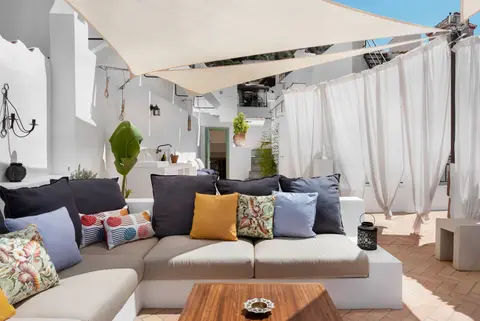
El Ingenio marks the lower edge of the old town, a few minutes below Casa AMARA. From here the ceramic-panel walk begins nearby, and the white lanes of the Barribarto climb behind it.